The Cost of Visibility
Rethinking Inclusion for Trans Refugees and Asylum Seekers in Settlement Systems
Introduction
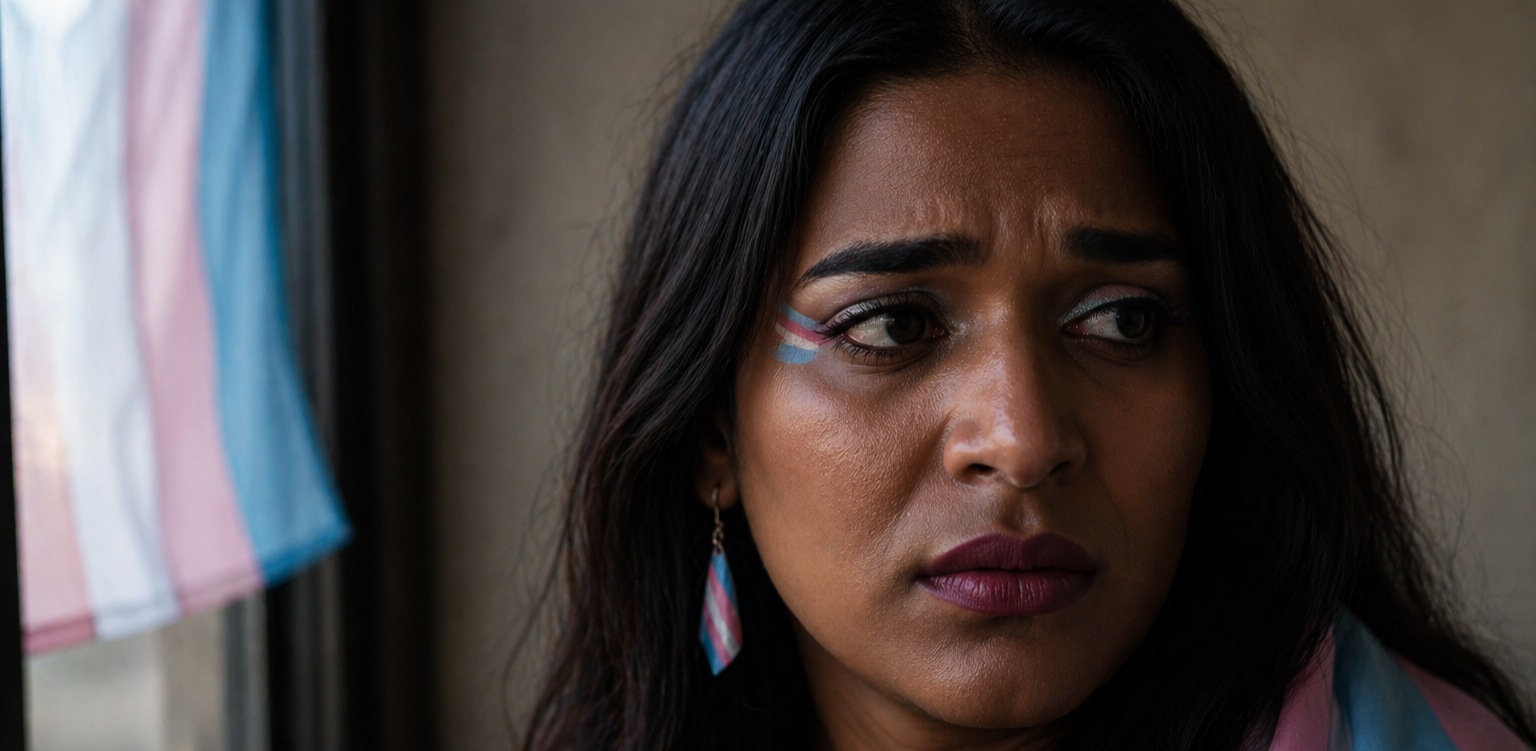
Visibility is often framed as progress. A sign of inclusion, recognition, and safety.
In many systems, visibility is treated as evidence of inclusion, rather than something that must be made safe.
For trans people from refugee backgrounds, this framing overlooks a critical reality: visibility is only meaningful when the conditions exist to make it safe.
As a trans woman who was forced to leave her country due to the risks associated with my identity, visibility was never a simple act of expression. It was a calculation.
Being seen meant exposure to violence, rejection, and loss of safety. It also meant internal conflict shaped by years of being told that my identity was a disorder, a source of shame, and a threat to family dignity. reflecting patterns documented in psychological research on gender diversity.
This understanding of visibility does not disappear through displacement. It travels with us.
Research reflects this complexity. The Equal Identities report by the Australian Human Rights Commission highlights ongoing structural barriers faced by LGBTIQ+ people in Australia, particularly where identity intersects with other forms of marginalisation.
Broader research also shows that many people actively manage or conceal aspects of their identity to avoid harm, reinforcing that visibility is shaped by safety, not simply personal choice.
This is reflected in settlement contexts. Research by the Forcibly Displaced People Network found that 38% of LGBTIQ+ respondents felt included in their ethnic communities only when they did not disclose their identity.
Similarly, guidance from UNHCR highlights that risks related to safety, discrimination, and access to services often persist across displacement and resettlement.
Despite this, visibility continues to be treated within services as a neutral or positive outcome.
It is not. When safety is not in place, visibility can increase exposure to harm, exclusion, and disengagement.
Visibility Across the Refugee Journey
Visibility does not become safer across the refugee journey. It becomes more complex and more strategic.
In countries of origin, visibility can lead to punishment by both society and authorities.
In transit contexts such as Turkey, where I spent years seeking asylum, people often wait for their claims to be processed with limited legal protection and support, and where visibility can determine access to even the most basic means of survival.
For many trans refugees, being visibly trans means:
being denied even informal employment
exclusion from housing
exposure to harassment and violence
increased vulnerability to exploitation
In these contexts, invisibility is not denial. It is a survival strategy, involving constant decisions about how to present, what to disclose, and when it is safe to be recognised.
Years can be spent navigating this reality, often without access to stable income, safety, or gender-affirming care.
The Illusion of Safety in Settlement
Arrival in Australia is often expected to mark a transition into safety and dignity.
For many trans refugees, this expectation is quickly disrupted.
From the first point of contact, safety can be compromised. Interpreters, bicultural workers, and frontline staff may share cultural backgrounds but lack the capability required to work respectfully with trans people.
Misgendering, discomfort, and bias can occur immediately.
These early interactions shape trust.
This reflects a broader assumption within systems that risk ends with arrival, despite evidence that challenges often continue in different forms.
When trust is broken at the beginning, many trans people withdraw from services altogether. Not because they are independent, but because engagement feels unsafe.
A System Failure in Practice
This reflects patterns I have seen repeatedly in my work with trans people from refugee backgrounds. The following example draws on a real case, with identifying details changed.
Consider the experience of a trans woman arriving in Australia after years in transit, including prolonged displacement in Turkey.
Her arrival was expected to mark the beginning of safety.
Instead, risk began immediately.
At the airport, staff responsible for welcoming her used the name listed on her documents rather than her affirmed name. She was repeatedly misgendered. There were visible reactions to her appearance, including whispering and discomfort.
This was her first interaction with the system.
In the following weeks, interpreter allocation created further harm. Interpreters from similar cultural backgrounds, without appropriate preparation, misgendered her and reinforced the same dynamics she had fled.
Trust was not built. It was lost.
Housing placement compounded the situation. She was placed in shared accommodation with individuals from similar cultural contexts where transphobia was prevalent. Verbal abuse followed. The environment was unsafe.
She left.
For six months, she lived without stable housing, avoiding services entirely.
This was not due to a lack of need. It was a response to repeated harm.
Re-engagement only occurred when a lived experience-informed intervention took place. Through advocacy, she was relocated to safe housing. Consistent support helped rebuild trust over time.
Her situation improved not because the system worked, but because it was actively challenged.
The Cost of Visibility
Visibility carries a cost. That cost does not disappear in settlement contexts. It takes different forms, often becoming less visible but no less impactful.
Being visible as a trans person can lead to:
unsafe or inappropriate housing placements
rejection from employment despite qualifications
exclusion or harassment in education settings
being perceived as less capable or less deserving
Many trans refugees make deliberate decisions to remain unseen in order to access basic needs.
This is not a free choice. It is a survival strategy shaped by risk.
When visibility is unsafe, individuals do not simply face personal challenges. They disengage from services, avoid support, and navigate systems alone.
This creates a gap between service intention and actual impact. It is not only a wellbeing issue. It is a service effectiveness and risk issue.
The System Misread
Many services operate on an unexamined assumption:
Visibility equals inclusion.
This assumption is flawed.
Encouraging disclosure without ensuring safety shifts the burden onto the individual.
Trans refugees are often expected to share their identity in environments that are not prepared to respond safely. At the same time, non-disclosure is often misinterpreted as disengagement or lack of need.
Silence is misread as safety.
At a broader level, lived experience is frequently invited into systems symbolically but not structurally.
Stories are welcomed. Power is not shared.
What This Case Reveals
The case above is not an isolated incident. It reveals a pattern of systemic gaps:
Early contact is not treated as a critical point of safety risk
Interpreter systems prioritise language matching over safety and competency
Housing allocation processes fail to assess trans-specific risk
Disengagement is misinterpreted rather than recognised as a response to harm
Mechanisms to repair harm are weak or absent
These are not individual failures. They are system design issues.
Addressing these gaps requires more than awareness. It requires changes to how services are structured, delivered, and held accountable.
Rethinking Visibility: From Expression to Risk
Visibility is not experienced in the same way across contexts.
For many trans refugees, it’s something constantly managed depending on safety, context, and past experience.
Decisions about being visible are shaped by:
safety of the environment
power dynamics
past experiences of harm
access to support
This requires a shift in thinking.
The question is not:“Why are people not being visible?”
The question is:“What conditions make visibility safe or unsafe?”
What Safe Visibility Requires
If visibility is to be meaningful, it must be supported by systems designed to reduce risk.
Structural Safety
clear protocols for managing identity-related information, including confidentiality and controlled access
screening and preparation of all staff, including interpreters and bicultural workers, to ensure they have the capability to respond safely and respectfully to trans people from refugee backgrounds
housing allocation processes that assess safety and compatibility, not just availability
Relational Safety
building trust before encouraging disclosure
recognising hesitation as a rational response to risk, not resistance
avoiding assumptions that visibility is always beneficial or appropriate
System Accountability
embedding lived expertise into decision-making, not just consultation
monitoring outcomes and safety, not just participation or engagement
treating harm as a system responsibility, with clear pathways for response and repair
Addressing this requires targeted workforce development, system review, and meaningful integration of lived expertise into service design and delivery.
The Cost of Getting This Wrong
When systems fail to address the risks associated with visibility:
trans refugees disengage from services
isolation increases
mental health deteriorates
housing and employment instability persist
At a system level, this results in services that are underutilised by those who need them most.
It also produces a misleading conclusion:
“We don’t see many trans clients.”
In reality, many have learned that being visible within services is not always safe.
Services invest significant resources into settlement and support programs. When trans refugees disengage due to unsafe conditions, those services are not reaching the people they are designed for.
This results in reduced impact, hidden unmet needs, and a false perception that the system is working as intended.
Moving Beyond Symbolic Inclusion
Awareness campaigns and visible gestures of support are not enough.
When visibility is encouraged without reducing risk, inclusion remains symbolic.
Meaningful change requires:
shifting from representation to responsibility
recognising lived expertise as knowledge
being willing to change systems, not just language
For organisations, this requires a shift from encouraging visibility to designing for safety.
Without this shift, inclusion efforts remain symbolic and may unintentionally reproduce harm rather than reduce it.
The Role of Lived Expertise
Lived experience is often included as narrative, but excluded from power.
In many services, it is used to inform, validate, or humanise programs, while decisions about design, risk, and implementation remain unchanged.
This creates a critical gap.
The people most affected by system failures are invited to describe harm, but not to shape the conditions that prevent it.
In the context of trans refugees, this has direct consequences.
Without lived expertise informing how services operate, systems continue to overlook how visibility creates risk, how trust is lost, and how disengagement occurs.
Asking people to share their stories without enabling them to influence decisions reproduces the same imbalance that created harm in the first place.
It keeps power where it has always been, while presenting inclusion as achieved.
Meaningful inclusion requires more than consultation.
It requires sharing authority over how services are designed, delivered, and evaluated.
Without this, lived experience becomes symbolic, and systems remain unchanged.
If systems are not willing to share power, they are not practicing inclusion. They are performing it.
Conclusion
Visibility has always carried a cost for trans people from refugee backgrounds.
That cost does not disappear in settlement. It becomes less visible, but no less real, shaping access to safety, housing, employment, and participation in everyday life.
Inclusion cannot be measured by visibility alone. When systems encourage disclosure without ensuring safety, they shift responsibility onto individuals rather than addressing the conditions that create risk.
Visibility is not simply a personal expression. It is a matter of safety, dignity, and human rights.
If visibility is to be encouraged, it must be made safe. Without this, systems risk reinforcing the very harm they claim to address.
This requires more than awareness. It requires deliberate action to redesign how services operate, how staff are prepared, and how decisions are made.
For organisations, the question is not whether you support visibility.
It is whether your systems make visibility safe.
Everyone has the right to live as their full self without that coming at the cost of safety.
Avesta Advisory supports organisations to translate this into practice through workforce development, system review, and lived experience-informed training, strengthening the capacity of services to make visibility safe.
The responsibility for this does not sit with individuals navigating risk.
It sits with systems willing to change.
Written by Saina Avesta
27 April 2026
Note
This insight draws on lived experience and ongoing work with trans people from refugee backgrounds across settlement contexts.
About the Author

Saina Avesta is the Founder and Principal Consultant at Avesta Advisory, supporting organisations to strengthen trauma-informed and intersectional practice when working with LGBTIQA+ people from refugee and multicultural backgrounds.
Drawing on her lived experience as a trans woman from Iran, including years spent in Turkey navigating displacement and resettlement, Saina brings deep insight into the realities faced by LGBTIQ+ forcibly displaced people. She has worked extensively as a peer leader and community practitioner, building trust within LGBTIQ+ refugee communities.
Through Avesta Advisory, she translates community knowledge and lived experience into practical system-level insight for organisations across settlement, health, community and policy sectors.
Acknowledgement
The author would like to thank Thomas Dutton for his editorial feedback and review support.