Protection Gaps for LGBTQI+ Refugees in Countries of Asylum

Prolonged displacement, visibility, and the role of community knowledge in connecting people to safety
For many people, reaching a country of asylum is imagined as the beginning of safety.
For some LGBTQI+ refugees, it is not.
Leaving a country where a person has experienced persecution, violence, family rejection or threats may remove them from one immediate source of danger. It does not necessarily remove the social and institutional conditions that can make everyday life unsafe.
For people whose gender identity, gender expression, appearance or behaviour is perceived as different from prevailing social expectations, visibility can become part of the protection environment.
This matters particularly when displacement becomes prolonged.
A person may spend years waiting for a durable solution while navigating housing, employment, healthcare, documentation, public space and interactions with institutions. During this time, the risks associated with identity expression may not disappear. In some circumstances, they may accumulate.
But there is another part of this problem that deserves greater attention.
What happens when the people experiencing the greatest risk are not adequately identified, referred or connected to a pathway to safety?
A person may be recognised as LGBTQI+ and still not have their particular protection circumstances understood.
They may seek protection through formal systems and receive a negative decision.
They may remain in a country where they continue to face serious risks.
They may not be identified for a third-country solution.
They may struggle to understand what pathway exists next.
And they may eventually turn to a community network because the formal system has not provided a clear route forward.
For refugee-led and diaspora communities, these situations are not abstract.
Community organisations may encounter people after other systems have already failed to provide safety, clarity or a durable solution.
The community may know the person's circumstances, understand the local environment, recognise changes in their risk and have earned enough trust for the person to explain what is really happening.
Yet community knowledge does not automatically become protection.
This creates a critical systems question:
What happens when the people closest to the problem can identify risk, but there is no clear, safe and accountable mechanism for connecting that knowledge to protection decision-making?
And:
Who is being missed while the system is looking for people to protect?
When being seen becomes a protection concern
LGBTQI+ refugees are not a homogenous group.
Two people may share the same identity while experiencing very different levels of exposure to risk.
For some, sexual orientation or gender identity may remain relatively private, and they may have greater control over whether others perceive or know about their identity.
For others, aspects of their appearance, gender expression, voice, clothing, mannerisms or behaviour may make them more visibly gender or sexually non-conforming.
The issue is not that visibility itself creates vulnerability.
The issue is that social and institutional environments can turn perceived difference into exposure to discrimination, violence or exclusion.
For some trans women and gender-diverse people, for example, appearance and gender expression may make it more difficult to control whether others perceive them as gender non-conforming.
This can affect ordinary activities.
Finding housing can become a question of whether a landlord will accept them.
Looking for employment can involve concerns about discrimination or harassment.
Going to hospital can become a question of whether they will be treated safely and respectfully.
Using public transport or entering a public space can involve assessing how others may respond.
Interacting with authorities can create concerns about disclosure, documentation or treatment.
These are not necessarily isolated events.
When they occur repeatedly, ordinary life can become a continuous process of risk management.
Protection assessment should therefore not stop at the question:
“Is this person LGBTQI+?”
It should also ask:
“How does this person's identity, identity expression and environment affect their actual protection situation?”
Identity expression is shaped by displacement
Gender identity and expression do not exist separately from material circumstances.
For many trans and gender-diverse people, gender affirmation can involve social transition, medical care, hormone therapy, surgery, documentation changes, clothing, housing, employment and supportive social networks.
Access to these things is highly unequal.
A person experiencing prolonged displacement may have limited financial resources, insecure accommodation, restricted employment opportunities, uncertain legal status or limited access to healthcare.
They may not be able to access gender-affirming healthcare.
They may not be able to afford it.
They may be concerned about disclosing their needs to healthcare providers.
They may have documents that do not reflect their current name, gender or appearance.
These circumstances can make visibility more difficult to manage.
Documentation can become particularly significant.
When official documents contain information that does not correspond with how a person is perceived or identifies, routine administrative interactions can become moments of disclosure.
A document check, employment application, hospital registration, accommodation process or interaction with an authority can reveal information that a person may otherwise have chosen not to disclose.
The issue is therefore not documentation alone.
It is the interaction between:
documentation + identity expression + institutional processes + social attitudes
For some people, these interactions happen repeatedly.
Over time, the cumulative effect can be significant.
Protection does not end at the border
Refugee protection is sometimes implicitly understood as a journey from danger to safety.
The reality can be more complicated.
A person may leave their country because of persecution associated with their identity and still experience serious discrimination, exclusion or insecurity because of that same identity in the country where they seek protection.
The location of the risk has changed.
The underlying vulnerability may not have disappeared.
In some cases, the protection environment may also deteriorate while a person is waiting.
This is particularly important in environments where LGBTQI+ people face broader social or institutional hostility.
Community engagement with displaced LGBTQI+ people in countries of asylum, including contexts such as Türkiye and Pakistan, can reveal how visible LGBTQI+ people may continue to navigate significant risks while waiting for a durable solution.
These experiences should not be treated as proof that every formal protection decision is wrong.
Nor should every unsuccessful case automatically be attributed to discrimination or bias.
The reasons why a person is not recognised, referred or connected to a pathway can be complex.
They may include documentation problems, communication gaps, limited information, procedural barriers, difficulties disclosing sensitive information, lack of appropriate referral mechanisms, limited understanding of a particular diaspora community, or broader barriers within the local protection environment.
But one distinction is essential:
A protection decision does not necessarily mean that the underlying protection problem has disappeared.
A person whose claim has been rejected may still be unsafe.
A person who has not been identified for a durable solution may still face serious protection risks.
A person who has not been referred to an appropriate pathway may still need one.
This is where protection systems need to remain attentive to what happens after a decision.
Because:
The protection environment can change while a person is waiting.
When systems miss the people most at risk
For some LGBTQI+ refugees, the problem is not simply that protection risks exist.
It is that those risks may not be adequately recognised, communicated or acted upon by the systems responsible for protection.
Community networks may encounter people whose circumstances have deteriorated significantly after they have already sought protection through formal systems.
Some may describe having been rejected by authorities in their country of asylum.
Others may have spent years waiting without being connected to a pathway that they or their community believe could address their protection needs.
Others may have been unable to navigate available pathways because the information, eligibility requirements, documentation or referral mechanisms were not accessible to them.
The point is not to assume that communities always know the correct solution.
They do not.
Nor should community networks replace professional protection assessment or institutional responsibility.
The point is different.
Communities may know when something is wrong before the system has a mechanism to respond to it.
A community organisation may know that a person is increasingly afraid to leave their accommodation.
It may know that someone has lost access to healthcare.
It may know that a trans woman is experiencing repeated harassment because of her appearance.
It may know that a person's housing has become unsafe.
It may know that a person has already approached several organisations without finding a viable pathway.
It may know that a person is considering leaving one country of asylum and seeking protection somewhere else because they no longer believe they can remain safely where they are.
These are not necessarily formal case assessments.
They are contextual signals of changing protection circumstances.
And if those signals have nowhere to go, the system can miss what is happening.
When a formal pathway exists but a person remains without safety
A pathway can exist on paper while remaining inaccessible in practice.
This distinction matters.
A country may have asylum procedures.
An international organisation may have resettlement processes.
Governments may have humanitarian programmes.
Community sponsorship or other complementary pathways may exist.
Yet an individual may still have no realistic route to safety.
They may not meet a particular eligibility requirement.
They may lack documentation.
They may not understand the pathway.
They may not know whom to contact.
They may have been referred elsewhere.
They may have received conflicting information.
They may have approached an organisation but not been able to communicate the full circumstances of their case.
Or the pathway may simply not have been designed with their particular community or circumstances in mind.
For a person already experiencing prolonged displacement, each of these barriers can have consequences.
The longer the gap continues, the longer the person remains exposed to the environment that is causing concern in the first place.
This raises an uncomfortable but necessary question:
Can a protection system be considered effective if a pathway exists but the people who most need it cannot reach it?
The answer requires looking beyond the existence of programmes and examining how people actually experience them.
The people closest to the problem often see patterns first
Community networks frequently encounter problems before they become visible through formal systems.
A person may tell a community member that they cannot safely access a hospital.
Another may describe difficulties finding employment.
Someone else may explain that their documentation repeatedly exposes them to unwanted disclosure.
Another person may seek help because they have been rejected from accommodation.
Another may explain that they have already sought protection through formal channels and still do not feel safe.
Individually, these may appear to be separate cases.
Across a community, they can reveal a pattern.
Refugee-led and community-led organisations can identify recurring barriers, observe changes over time, understand informal coping strategies and recognise emerging risks that may not yet be visible through formal reporting mechanisms.
This is one of the most important forms of community knowledge.
Community knowledge is not simply a source of stories. It can be a source of protection intelligence.
But there is a difference between having this knowledge and being able to act on it.
A community may know who is struggling.
It may know who is becoming less safe.
It may know who has exhausted available options.
It may know who is at particular risk because of visibility, gender expression, documentation or lack of support.
But without a clear and trusted mechanism for referral, escalation or collaboration, the community may have nowhere meaningful to take that information.
The gap between knowing and being able to help
This is where community-led organisations can become caught in an impossible position.
People approach them because they trust them.
The organisation listens.
It gathers information.
It helps the person understand available options.
It may write support letters, make referrals, provide practical assistance or contact relevant stakeholders.
But then the question becomes:
What happens next?
If there is no recognised referral pathway for a refugee-led or diaspora-based organisation to communicate a protection concern to the appropriate decision-maker, the organisation may be left trying to navigate a system from the outside.
It may not know who can receive the information.
It may not know whether a referral will be considered.
It may not know whether the information can influence an existing case.
It may not know whether there is a mechanism for urgent escalation.
And the person seeking help may be left waiting again.
This is not simply a community capacity problem.
It is a systems-design problem.
A community can identify risk without having the authority or mechanism to resolve it.
That gap matters.
Because when a person is already living in an unsafe environment, another period of uncertainty is not neutral.
When scale does not equal proximity
Large humanitarian, settlement and service organisations can provide important infrastructure, expertise and resources.
But organisational scale does not automatically produce proximity to every community.
Particular diaspora communities may have their own languages, histories, trust relationships, communication practices and informal support networks.
People who have experienced discrimination, rejection or institutional mistrust may be more likely to disclose sensitive information to someone they know from their own community than to an unfamiliar institution.
This does not mean that community organisations always have the answer.
It does not mean that lived experience replaces professional expertise.
It means that different actors see different parts of the same system.
A formal institution may see the policy.
A caseworker may see the case.
A government may see the eligibility criteria.
A large organisation may see the service system.
A refugee-led community network may see what happens between those structures and the person's everyday life.
That knowledge can be particularly important for diaspora communities whose specific needs, languages, trust structures and patterns of displacement may not be fully understood through generic approaches.
The solution is not to choose between formal institutions and community organisations.
It is to connect them.
Trust is part of protection infrastructure
Some people may be reluctant to approach formal institutions.
They may fear discrimination.
They may have experienced rejection previously.
They may not know which organisation can help.
They may be concerned about confidentiality.
Or they may simply trust someone from their community more than an unfamiliar institution.
If people disclose important information only when they feel safe, then:
trust affects what protection systems are able to know.
And what systems cannot see, they may struggle to respond to.
Community trust should therefore not be treated as an informal extra.
It can be part of the infrastructure through which protection information becomes visible.
This does not mean every piece of community information should automatically determine a protection decision.
It means that systems should have ethical, safe and accountable ways to receive contextual information from trusted community actors and assess it appropriately.
From consultation to contribution
There is a significant difference between asking communities for their views and building systems that can use community knowledge.
The first asks:
“What do you think?”
The second asks:
“What are you seeing?”
“What patterns are emerging?”
“What barriers are people repeatedly encountering?”
“Who appears to be falling through the gaps?”
“What is changing?”
“What happens to people after they are rejected?”
“What happens to people who are never connected to a pathway?”
“What solutions are people already developing?”
“Where are existing systems failing to respond?”
And then:
“What should we change?”
This is a different model of participation.
Community knowledge can contribute to:
identifying protection risks
understanding barriers to services
improving referral pathways
strengthening case context
identifying emerging risks
identifying people or groups who may be disproportionately missed
designing complementary pathways
improving community sponsorship models
strengthening settlement planning
developing safer communication mechanisms
evaluating whether interventions are working.
The aim is not to transfer institutional responsibility to communities.
It is to connect:
community intelligence + institutional responsibility + decision-making
Funding community capacity is part of the solution
Refugee-led and community-led organisations are often expected to provide insight, consultation, interpretation, community engagement, navigation and support while operating with limited resources.
This creates a structural contradiction.
Institutions may recognise that community knowledge is valuable while failing to resource the infrastructure required to generate, maintain and ethically use that knowledge.
If community organisations are expected to identify emerging risks, support community members, communicate with institutions and contribute to policy development, then their capacity needs to be treated as part of the protection ecosystem.
This can include investment in:
community coordination
engagement
navigation and referral
information sharing
safeguarding
governance
training
knowledge management
advocacy
partnership development.
But community organisations should not become unpaid extensions of government or international agencies.
Community capacity should strengthen formal protection systems, not substitute for their responsibilities.
A genuine partnership also requires reciprocity.
If a community organisation repeatedly provides information to a system, it should be able to understand what happens to that information where confidentiality and protection requirements permit.
If communities identify barriers, institutions should be willing to examine whether those barriers can be changed.
If community members are repeatedly presenting the same problem, the response should not always be another individual referral.
Sometimes the recurring problem is the system itself.
What this means for resettlement
Resettlement is not simply a mechanism for moving people from one country to another.
It is also a protection response.
For people experiencing serious and ongoing protection risks in a country of asylum, resettlement may be assessed as an appropriate durable solution.
But identifying someone for resettlement requires understanding their actual protection environment.
For LGBTQI+ refugees, identity alone cannot describe that environment.
Protection assessment can benefit from considering:
1. Visibility and exposure
How easily can the person control whether others perceive their identity?
Does their appearance or gender expression increase exposure to discrimination, harassment or violence?
2. Everyday safety
What happens when the person accesses housing, employment, healthcare, transportation or public spaces?
3. Documentation and institutional interaction
Do identity documents create additional exposure or barriers?
Are there administrative processes that require repeated disclosure?
4. Healthcare
Can the person safely access general healthcare and, where relevant, gender-affirming or other essential healthcare?
5. Duration and cumulative exposure
How long has the person already been displaced?
What has changed during that period?
What is likely to happen if the current environment continues?
6. Previous protection outcomes
What happened when the person sought protection?
Was the outcome clearly communicated?
Does the person understand what options remain?
Has the risk environment changed since the original assessment or decision?
7. Community support
Does the person have a trusted community network?
If not, what happens when they need assistance?
8. Changes in the protection environment
Have political, social or institutional developments increased risk?
These considerations are not intended to create another formula for determining who is “deserving.”
They are intended to make protection assessment more contextual, dynamic and grounded in the environment in which people actually live.
Complementary pathways need protection intelligence too
Resettlement is not the only mechanism through which people can access third-country solutions.
Complementary pathways can include humanitarian, family, education, employment and sponsorship pathways.
But a pathway can exist on paper while remaining inaccessible in practice.
Community organisations can help identify why.
They can identify:
information gaps
documentation barriers
eligibility barriers
practical accessibility problems
language barriers
financial barriers
gaps in navigation support
groups who are disproportionately excluded
diaspora-specific barriers
gaps between referral and actual access.
This is where community knowledge becomes pathway intelligence.
A pathway should not be considered successful simply because it exists.
It should also be examined through the experience of the people trying to access it.
Who reaches it?
Who does not?
Who receives timely information?
Who gets referred?
Who is unable to complete the process?
Who gives up because the process becomes too difficult?
And what happens to people who do not fit neatly into the assumptions built into the pathway?
These questions matter particularly for refugee-led and diaspora communities that may have limited access to institutional navigation support.
A pathway that is designed without meaningful community knowledge may unintentionally reproduce the same barriers it was intended to address.
What happens after a person is rejected?
This question deserves much more attention.
For someone already living with identity-related risk, rejection by a local authority or unsuccessful access to a protection mechanism does not necessarily make the person safer.
They still have to live somewhere.
They still need housing.
They still need healthcare.
They still need to work or survive.
They still have to interact with authorities.
And they still have to navigate the social environment that may have contributed to their original protection concern.
For some people, this can create a cycle of repeated displacement.
A person may leave their country of origin because of persecution.
They may seek protection in a neighbouring country.
They may continue to experience serious risk there.
They may seek protection through formal systems and not obtain the outcome they need.
They may then consider moving again because they do not believe they can remain safely where they are.
This can create multiple layers of exposure:
persecution in the country of origin → displacement → ongoing identity-based risk in the country of asylum → unsuccessful or inaccessible protection processes → prolonged waiting → renewed search for safety
For a visibly gender-nonconforming person, these layers can become particularly difficult when the same characteristics that contributed to persecution in the country of origin also expose them to risk in the country of asylum.
The result can be a person who has crossed borders but has not reached safety.
What happens while people wait?
One of the most important questions for protection systems may be one of the simplest:
What happens to this person while they are waiting?
A pathway should not be assessed only by its eventual outcome.
The period before that outcome matters too.
For someone experiencing repeated discrimination, insecure housing, healthcare barriers, unemployment, violence or isolation, waiting can have consequences.
A system that measures only whether a person eventually receives a durable solution may miss what happens during the years before it arrives.
This suggests a broader approach to protection monitoring.
Instead of asking only:
“Has the case progressed?”
systems could also ask:
“What has happened to this person's protection environment while the case has been waiting?”
“Has their risk increased?”
“Have new barriers emerged?”
“Do they still have access to essential support?”
“Has anything changed that should affect how the situation is understood?”
Time does not simply pass.
Time can change the protection environment.
Communication is also part of protection
There is another issue that can appear administrative but has significant human consequences: communication.
People living through prolonged uncertainty may repeatedly contact organisations because they do not know what is happening.
A delayed response may be interpreted as rejection.
Silence may reinforce mistrust.
Trauma-informed communication does not require institutions to promise outcomes they cannot control.
It requires something more realistic:
acknowledge the request
explain what can and cannot be done
provide realistic expectations
identify the next step where possible
avoid creating false hope
communicate when there is no update.
Predictability matters.
Dignity matters.
Even when the answer is “we do not know yet,” people deserve to know that their situation has been received and understood.
For someone who has already experienced rejection, displacement and uncertainty, silence can become another layer of uncertainty.
Communication cannot solve a protection gap.
But poor communication can make an existing protection gap harder to navigate.
From listening to shared problem-solving
The broader lesson is not that formal protection systems are incapable of understanding communities.
It is that institutions and communities often hold different forms of knowledge about the same system, and those forms of knowledge are not always connected effectively.
Formal systems have policy, procedures, institutional authority, case information and resources.
Communities have lived knowledge, trust, contextual understanding, informal information, pattern recognition and direct relationships with people experiencing the system.
Neither is sufficient on its own.
The opportunity lies in connecting them.
A stronger model is:
community experience → recurring pattern → evidence → systems analysis → practical solution → institutional implementation → evaluation → shared learning
That is where participation becomes more than representation.
It becomes infrastructure for better decision-making.
A practical model for institutions
Institutions working with LGBTQI+ refugees experiencing prolonged displacement could strengthen their practice by developing mechanisms for:
1. Community-informed risk identification
Create safe channels through which trusted community organisations can communicate emerging protection concerns, with appropriate consent and confidentiality.
2. Community-informed case context
Where appropriate, allow community knowledge to contribute contextual information that can help institutions understand an individual's circumstances.
3. Clear referral pathways
Develop recognised pathways through which refugee-led and diaspora-based organisations can raise protection concerns or seek guidance about appropriate referral options.
4. Risk escalation pathways
Develop clear processes for situations where conditions deteriorate while a person is waiting for a longer-term solution.
5. Pathway navigation
Work with community organisations to identify practical barriers to resettlement and complementary pathways.
6. Community and diaspora partnerships
Recognise the knowledge, relationships and practical support that communities can provide while maintaining appropriate institutional safeguards.
7. Sustainable community funding
Resource organisations that are performing essential engagement, navigation and knowledge functions.
8. Feedback loops
Where appropriate, tell communities what happened after they contributed information.
9. Monitoring the experience of waiting
Measure not only case progression but changes in safety, access and practical barriers during prolonged displacement.
10. Review of missed cases
Where patterns emerge of people repeatedly falling outside existing pathways, examine whether the problem lies in the individual circumstances, the referral mechanism, the eligibility design, the communication process or the broader system.
These mechanisms should not turn refugee-led organisations into unpaid extensions of government or international agencies.
They should create structured, ethical and adequately resourced relationships between community knowledge and institutional decision-making.
The broader systems lesson
The issue of visibility is ultimately part of a larger question about how institutions understand vulnerability.
Risk is rarely produced by identity alone.
It emerges through the interaction between:
identity + environment + institutions + time + access to support.
A person may be relatively safe in one environment and highly exposed in another.
A person may have greater control over disclosure in one context and much less in another.
A person's circumstances may also change because of healthcare needs, documentation, employment, housing or changes in the political environment.
Protection therefore needs to be understood dynamically.
The relevant question is not simply:
“What category does this person belong to?”
It is:
“What conditions are shaping this person's ability to live safely and with dignity right now?”
And there is another question institutions should be willing to ask:
“Who is not reaching our existing pathways, and what can community knowledge tell us about why?”
Because sometimes the problem is not that a person does not need protection.
The problem is that the system has not successfully connected that person to it.
From community knowledge to institutional change
There is a temptation to treat community knowledge as something institutions collect in order to demonstrate participation.
That is not enough.
The more useful question is what happens after the listening.
Does community knowledge change a programme?
Does it change a referral pathway?
Does it change a policy?
Does it change how risk is assessed?
Does it change how information is communicated?
Does it influence which complementary pathways are developed?
Does it change how resources are allocated?
Does it improve outcomes?
If the answer is no, then participation may have occurred without meaningful influence.
For communities experiencing prolonged displacement, the difference matters.
People do not need institutions simply to hear that waiting is difficult.
They need systems capable of asking:
Who is being missed?
Why are they being missed?
Who already knows they are at risk?
What mechanism exists to turn that knowledge into protection?
And:
What needs to change so that the next person does not have to become more vulnerable before the system can see them?
Conclusion
For LGBTQI+ refugees, protection cannot be understood through identity alone.
For some people, gender identity, gender expression, appearance or perceived difference can increase everyday exposure to discrimination and harm. When displacement continues for years, those risks can accumulate across housing, employment, healthcare, documentation, public space and interactions with institutions.
But the protection challenge does not end with recognising that vulnerability.
The people most at risk must also be able to reach the systems intended to protect them.
A protection pathway that exists but cannot be accessed is not experienced as a pathway.
A referral mechanism that does not connect people to an appropriate response does not create safety.
And a community that repeatedly identifies people at risk but has no clear way to communicate that knowledge to relevant decision-makers is carrying information that the protection system may never see.
The solution is not to treat visibility as a weakness.
It is to recognise that social and institutional environments determine how much risk visibility creates, and that formal systems need ways to understand those environments through both professional assessment and trusted community knowledge.
Refugee-led and community-led organisations can identify patterns, build trust, navigate barriers and provide contextual knowledge that formal systems may struggle to access.
But this contribution should not be extracted through unpaid labour or treated as symbolic participation.
It should be supported, resourced and connected to actual decision-making.
The deeper opportunity is to move from consulting communities about systems to working with communities to improve systems.
That means asking not only:
“Have we listened?”
but:
“Who are we missing?”
“What did we learn?”
“What changed because of it?”
and:
“What will be different for the next person?”
For someone who has already spent years waiting, that difference is not theoretical.
It can be the difference between another year of surviving a system and a system that begins to respond to the reality of their life.
Protection should not depend on how well a person can navigate a broken pathway, how visible their suffering has become, or whether they happen to find the right person to listen.
Better protection requires systems that can identify risk earlier, connect trusted community knowledge to institutional responsibility, and create realistic pathways to safety for the people who need them most.
Written by Saina Avesta
5 October 2026
-
This insight draws on community and practice-based knowledge, international refugee protection guidance, and contemporary reporting.
Persian Queer Network (PQN) community engagement, consultations, support and advocacy work
Practice-based knowledge drawn from recurring themes identified through community consultations, peer support, information sharing, navigation and advocacy. These observations are presented as community-informed practice knowledge, not population-level research.Persian Queer Network, A Testimony-Informed Overview of Lived Experiences and Urgent Priorities of Queer Refugees in Türkiye (2025)
Community-informed documentation of experiences, recurring patterns and priorities identified through engagement with queer refugees experiencing prolonged displacement.UNHCR, 3.1 Overarching Principles in Resettlement: Age, Gender and Diversity
Guidance relevant to considering physical appearance, sexual orientation, gender identity, gender expression and intersecting diversity factors in protection analysis.UNHCR, 3.3 Legal and/or Physical Protection Needs
Guidance on protection risks in countries of asylum, including risks affecting LGBTIQ+ refugees and the importance of individual circumstances and the wider protection environment.UNHCR, LGBTIQ+ Refugees | Integration Handbook
Guidance relevant to housing, employment, healthcare, documentation, confidentiality, trust and community connections.UNHCR, Community-Based Protection
Guidance on meaningful community participation in protection, including the role of affected communities in analysis, implementation and evaluation.UNHCR, Operational Guidance on Complementary Pathways
Guidance on complementary pathways as additional routes to third-country solutions.UNHCR, Protection Considerations, Key Principles and Eligibility
Guidance on integrating protection, accessibility, non-discrimination, safeguards and refugee perspectives into complementary pathway design and monitoring.UNHCR, Qualifications/Skills-Based Pathways: Education and Employment
Guidance on education and employment pathways and the role of governments, civil society, refugee-led organisations and other actors.UNHCR, Sponsorship Pathways
Guidance on sponsorship and the role of communities in supporting third-country admission and settlement while maintaining protection safeguards.Human Rights Watch, Türkiye: LGBT Rights Crackdown Strikes at Rule of Law (18 September 2026)
Contemporary reporting on the September 2026 crackdown affecting LGBTQI+ organisations and activists in Türkiye.
About the Author
Follow Saina on Linkedin
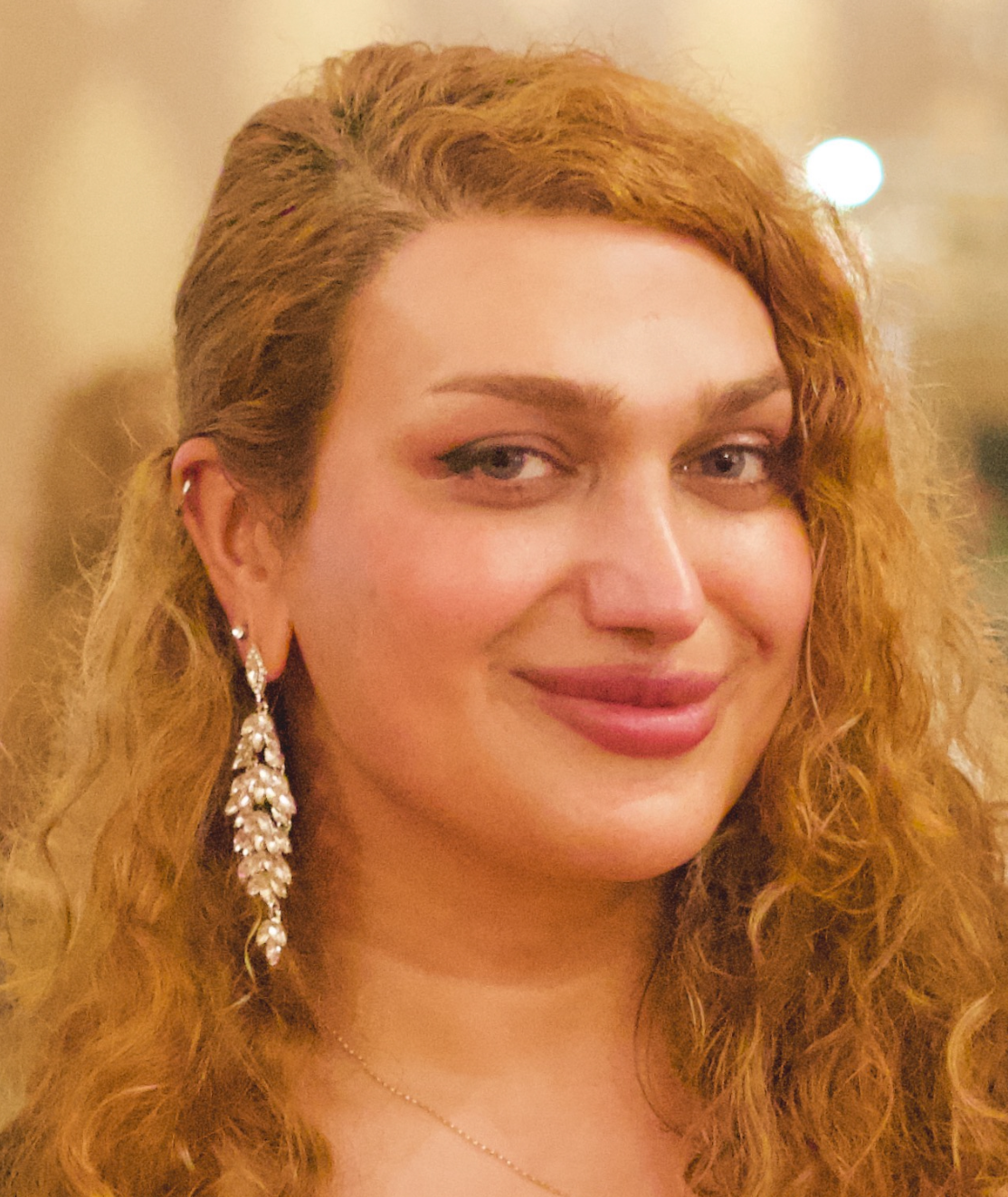
Saina Avesta is the Founder and Principal Consultant of Avesta Advisory, an independent knowledge and advisory practice focused on improving systems for displaced and marginalised communities.
She is also the Founder of the Persian Queer Network (PQN), a refugee-led community initiative supporting Persian-speaking LGBTIQA+ refugees and asylum seekers across Australia and countries of asylum.
Saina is a member of the UNHCR Refugee Advisory Group to the Consultations on Resettlement and Complementary Pathways (CRCP 2026-2027), contributing refugee perspectives to international discussions on refugee protection, resettlement and complementary pathways.
Across these roles, her work connects community knowledge, lived experience, systems practice and institutional change, with a focus on creating safer, more responsive and accountable systems for people affected by displacement and exclusion.